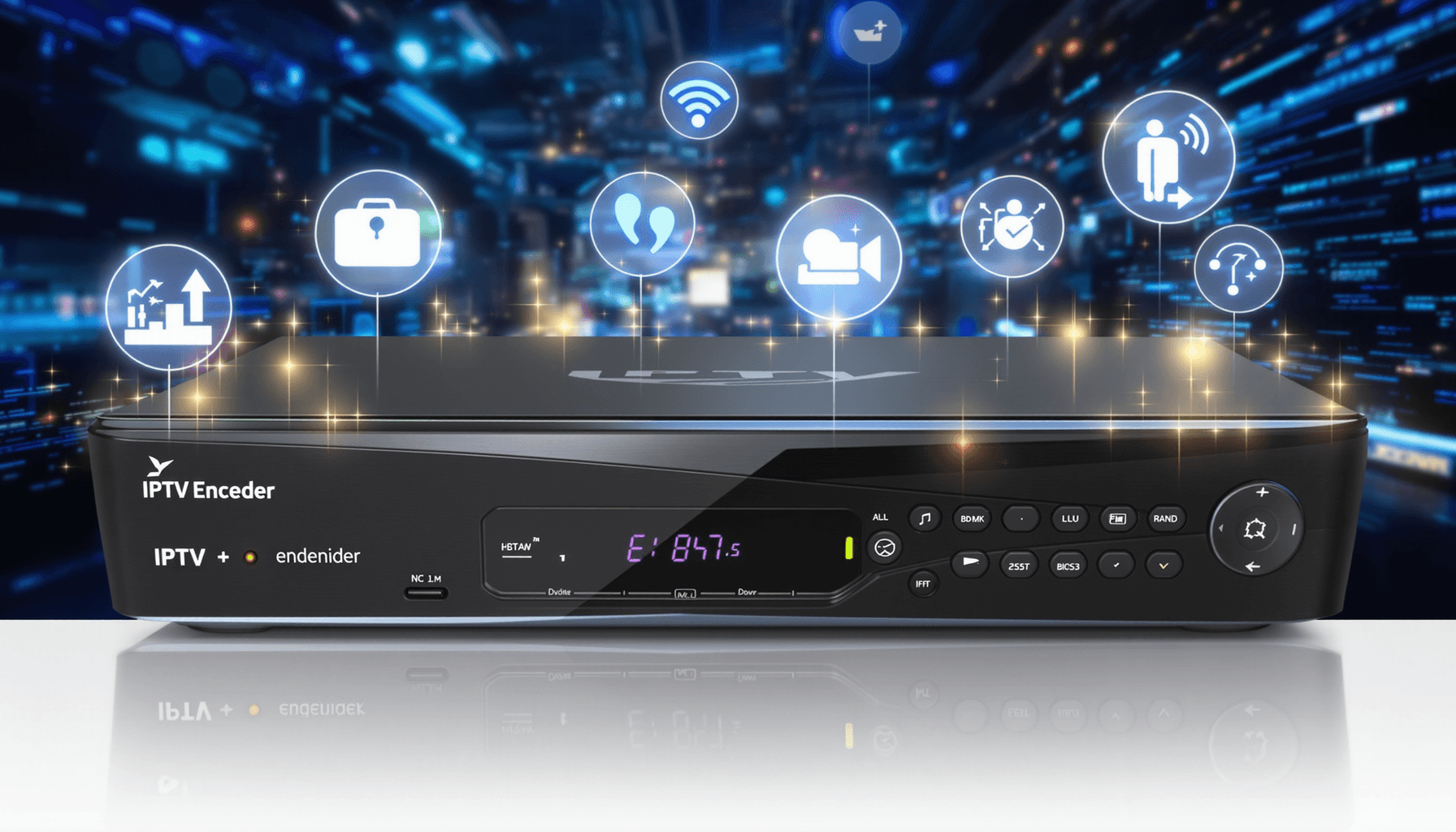
IPTV encoder encoders are a crucial part of modern streaming technology. They convert raw video signals into digital content that can be easily transmitted over the internet. These tools are used in various settings, from professional broadcasts to personal streaming setups, allowing content creators to deliver high-quality videos to audiences worldwide.
In 2025, the streaming industry requires advanced encoding solutions that prioritize quality, efficiency, and reliability. Whether you’re a professional broadcaster, content creator, or streaming service provider, choosing the right IPTV encoder can make a significant difference in your streaming experience.
This guide will provide you with:
- Insights into hardware vs software encoding solutions
- Important features for professional streaming setups
- Latest codec developments and their impact on stream quality
- Recommendations for different streaming scenarios
- Cost-effective solutions for various budget levels
- Advanced features shaping the future of video streaming
We’ll cover everything from technical specifications to practical applications as we delve into the tools that define successful IPTV streaming in 2025.
Understanding IPTV encoder encoders
IPTV encoder encoders are powerful tools that play a crucial role in the digital transformation process. They take raw video signals and convert them into streamable content that can be distributed over IP networks. These encoders are essential for compressing and packaging video data into formats that are suitable for transmission.
Types of IPTV encoder encoders
There are two main types of IPTV encoder encoders: hardware encoders and software encoders.
1. Hardware IPTV encoder encoders
- Dedicated physical devices
- Built-in processing chips
- Real-time encoding capabilities
- Lower latency performance
- Multiple input/output ports
- Higher price point
- Ideal for professional broadcasting
2. Software IPTV encoder encoders
- Computer-based applications
- CPU/GPU resource dependent
- Flexible deployment options
- Cost-effective solutions
- Customizable features
- Regular updates available
- Perfect for small-scale streaming
Key Functions of the Encoding Process
The encoding process involves several key functions:
- Signal Processing: This function is responsible for converting analog or digital video inputs into a format that can be processed by the encoder.
- Compression: The compression function reduces the file sizes of the video while maintaining its quality. This is important for efficient transmission over networks.
- Format Conversion: The encoder supports various codecs to ensure compatibility with different devices and platforms. Some of the codecs supported include H.264/AVC (industry standard), MPEG-2 (legacy format), HEVC/H.265 (advanced compression), and AV1 (next-generation codec).
How Encoders Work
Both hardware and software encoders use complex algorithms to achieve a balance between video quality and bandwidth efficiency. The compression technology employed by these encoders reduces redundant data in the video file while preserving essential visual information. This allows for smooth streaming even in challenging network conditions where bandwidth may be limited.
By understanding how IPTV encoder encoders work and the functions they perform, content creators and broadcasters can make informed decisions when it comes to delivering their videos over IP networks.
Types of IPTV encoder encoders
Hardware IPTV encoder encoders
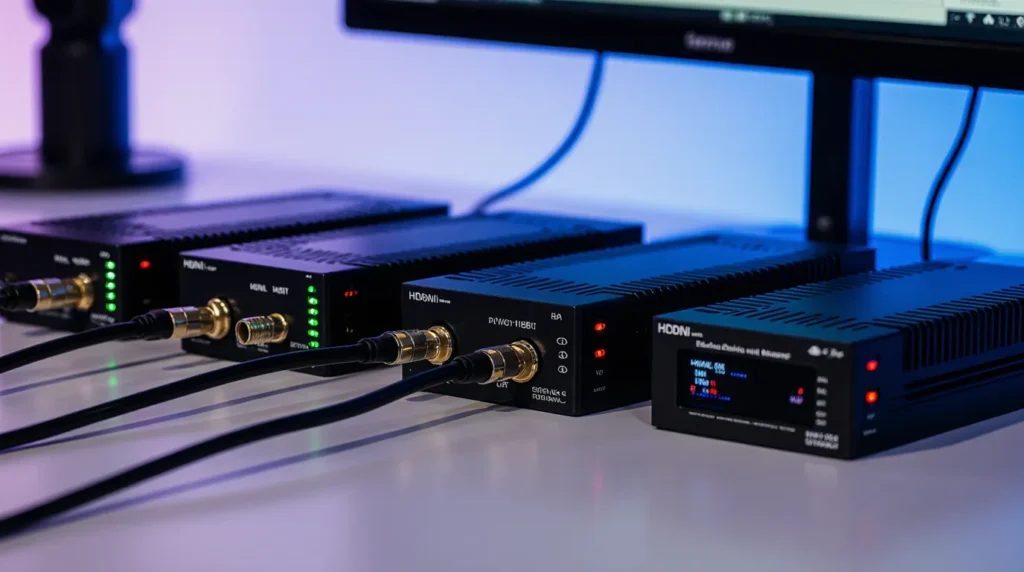
Hardware encoders are specialized devices designed for professional broadcasting settings. These dedicated units excel at real-time video encoding through specialized processing chips and optimized architectures.
Key Hardware Features:
- Built-in video inputs (HDMI, SDI, ASI)
- Multi-channel encoding capabilities
- Sub-second latency performance
- Redundant power supplies
- Hardware acceleration
- Professional audio interfaces
Hardware encoders support various streaming protocols that are crucial for professional broadcasting:
- UDP/RTP for internal networks
- RTMP for social media platforms
- HLS/DASH for adaptive streaming
- SRT for secure, reliable transmission
- RTSP for surveillance applications
The sturdy construction and dedicated processing power make hardware IPTV encoder encoders perfect for continuous operation in demanding broadcast environments.
Software IPTV encoder encoders
Software IPTV encoder encoders turn regular computers into powerful streaming machines using specialized software applications. These solutions offer exceptional flexibility and feature-rich broadcasting capabilities.
Popular Software Solutions:
- OBS Studio: Free, open-source platform with extensive plugin support
- vMix: Professional software with advanced production tools
- Wirecast: Broadcast-grade streaming software with multi-camera support
- VidBlasterX: Modular design for customizable workflows
Advanced Features:
- Scene composition and switching
- Graphics overlay management
- Virtual sets and green screen
- Multi-bitrate encoding
- Social media integration
- Audio mixing and effects
- Recording capabilities
Software IPTV encoder encoders utilize CPU/GPU resources to perform encoding tasks. This method offers cost-effective solutions but comes with certain considerations:
Performance Factors:
- Higher latency compared to hardware solutions
- Resource competition with other applications
- System stability dependencies
- Variable performance based on hardware specifications
The decision between hardware and software encoders often depends on specific use cases. Hardware IPTV encoder encoders excel in professional broadcast environments where consistent, low-latency performance is required. On the other hand, software encoders are better suited for productions that need extensive customization and feature-rich environments at lower cost points.
Modern encoding solutions continue to push boundaries by combining hardware acceleration with software flexibility through hybrid approaches. These innovations open up new possibilities for broadcasters looking for the best balance between performance and cost.
Key Features to Consider When Choosing an IPTV Encoder in 2025
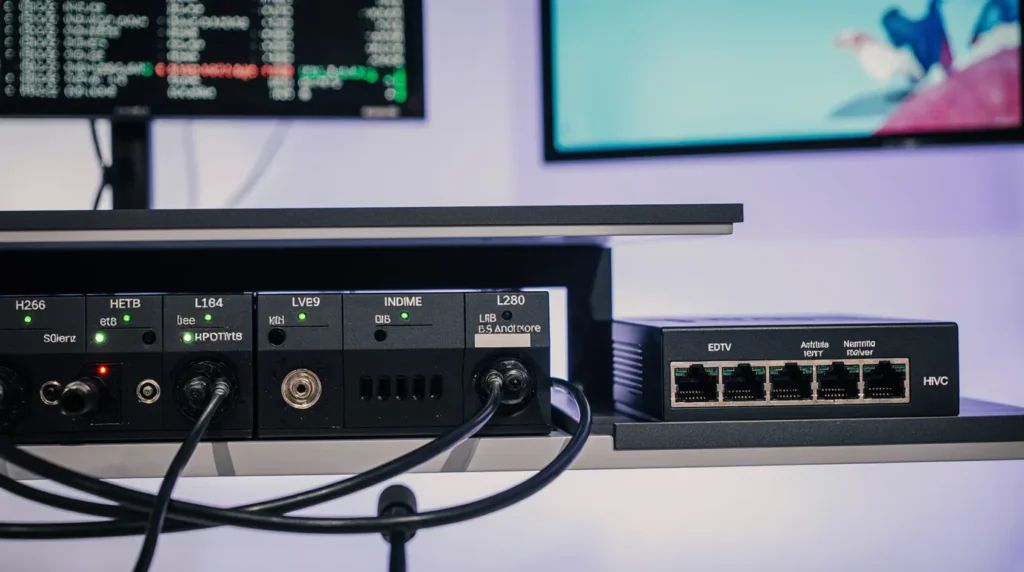
Codec compatibility stands as a crucial factor in selecting an IPTV encoder for 2025’s streaming landscape. The right codec choice impacts both streaming quality and reach across different devices.
H.264/AVC
- Industry standard with universal device support
- Balanced compression-to-quality ratio
- Higher bandwidth requirements
- Ideal for standard HD content delivery
H.265/HEVC
- Up to 50% better compression than H.264
- Reduced storage and bandwidth needs
- Growing device support
- Perfect for 4K content streaming
AV1 Codec
- Latest generation video compression
- 30% better efficiency than HEVC
- Royalty-free implementation
- Limited hardware support currently
The most versatile IPTV encoder encoders in 2025 support multiple codec options, allowing streamers to adapt their content delivery based on:
- Target audience device capabilities
- Available network bandwidth
- Quality requirements
- Storage constraints
Modern IPTV encoder encoders featuring hardware acceleration for these codecs deliver superior performance while maintaining optimal resource usage. Support for newer codecs like AV1 future-proofs your streaming setup, though maintaining H.264 compatibility ensures maximum reach across viewing devices.
Streaming Protocol Compatibility
Modern IPTV encoder encoders support multiple streaming protocols, each serving specific broadcasting needs and delivery requirements.
Core Streaming Protocols:
- RTMP (Real-Time Messaging Protocol)
- SRT (Secure Reliable Transport)
- HLS (HTTP Live Streaming)
- DASH (Dynamic Adaptive Streaming over HTTP)
1. RTMP (Real-Time Messaging Protocol)
- Traditional protocol with widespread support
- Low-latency delivery for live streaming
- Native integration with popular streaming platforms
2. SRT (Secure Reliable Transport)
- Advanced security through AES 128/256-bit encryption
- Packet loss recovery for unstable networks
- Ideal for high-value content transmission
3. HLS (HTTP Live Streaming)
- Adaptive bitrate streaming
- Built-in support across iOS devices
- Segment-based delivery for smooth playback
4. DASH (Dynamic Adaptive Streaming over HTTP)
- Platform-agnostic delivery
- Dynamic quality adjustment
- Support for multiple DRM systems
Professional IPTV encoder encoders enable simultaneous streaming across different protocols, allowing broadcasters to reach diverse platforms and audiences. This multi-protocol support facilitates content delivery to:
- Social media platforms (Facebook Live, YouTube)
- Custom IPTV applications
- Web-based players
- Mobile devices
- Smart TVs
The selection of appropriate protocols impacts stream quality, security, and viewer experience. SRT protocol stands out for professional broadcasts, offering packet loss recovery and end-to-end encryption. This security feature protects valuable content during transmission while maintaining optimal quality.
Resolution and Multi-Channel Support
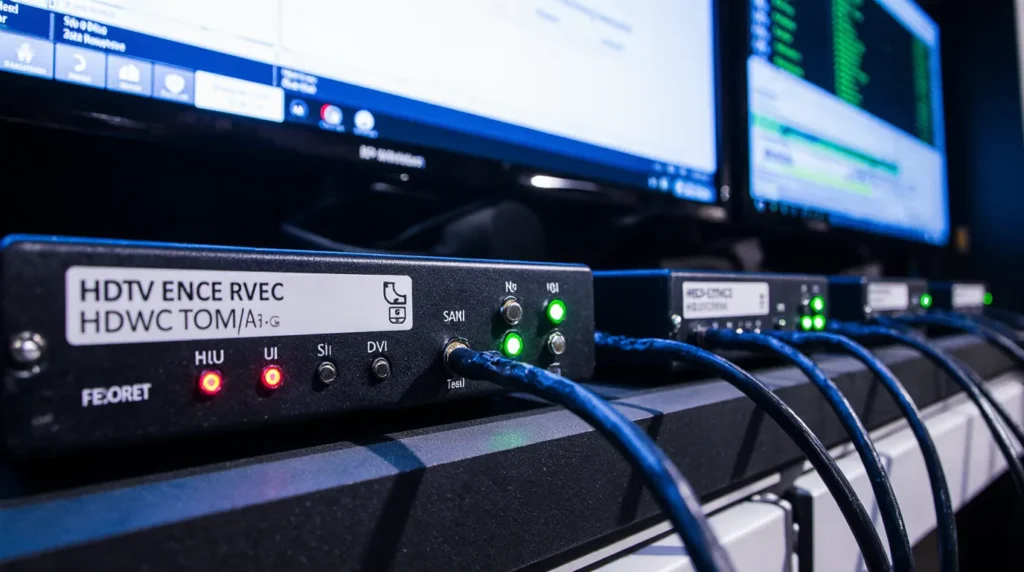
Modern IPTV streaming demands push IPTV encoder encoders to handle increasingly complex requirements. The rise of 4K content creates new challenges for broadcasters and content creators.
Resolution Capabilities
- Native 4K (3840 x 2160) support at 60fps
- HDR encoding compatibility
- 8K readiness for future-proof operations
- Adaptive bitrate encoding for different quality tiers
Multi-Channel Features
- Simultaneous encoding of multiple input sources
- Independent audio channel processing
- Picture-in-picture capabilities
- Multi-language stream support
High-resolution content requires significant processing power. Hardware IPTV encoder encoders excel at handling 4K streams with minimal quality loss, while software solutions may need dedicated GPU acceleration to maintain performance.
Multi-channel support enables broadcasters to:
- Stream different camera angles simultaneously
- Create backup feeds for redundancy
- Deliver region-specific content
- Support multiple audio tracks
The latest IPTV encoder encoders incorporate AI-powered scaling algorithms to optimize quality across different resolutions. These smart upscaling features help maintain visual fidelity when converting between formats.
Bandwidth management becomes crucial with high-resolution streams. Advanced encoders implement dynamic bitrate adjustment to balance quality and network constraints, ensuring reliable delivery across varying connection speeds.
Professional broadcasting setups benefit from encoders supporting SDI and HDMI inputs across multiple channels, enabling complex production workflows with minimal additional hardware requirements.
Resolution and Multi-Channel Support
Modern IPTV encoder encoders have evolved to meet the rising demand for 4K UHD content, pushing the boundaries of streaming quality. The latest encoders support resolutions up to:
- 3840 x 2160 pixels (4K UHD)
- 60 frames per second
- HDR (High Dynamic Range) capabilities
- 10-bit color depth
Importance of Multi-Channel Support in IPTV encoder encoders
Multi-channel support stands as a critical feature in contemporary IPTV encoder encoders. A single device can now process:
- Multiple HD streams simultaneously
- Various input sources (HDMI, SDI, IP)
- Different encoding profiles per channel
- Independent audio tracks
The ability to handle multiple streams through one encoder brings substantial benefits:
- Cost Efficiency: Reduced hardware requirements
- Space Optimization: Minimized rack space in data centers
- Simplified Management: Centralized control interface
- Resource Sharing: Balanced processing power allocation
Dynamic Resolution Scaling for Adaptive Bitrate Streaming
Advanced encoders support dynamic resolution scaling, allowing content providers to deliver adaptive bitrate streams. This feature enables viewers to receive optimal quality based on their network conditions and device capabilities.
Key Features of Multi-Channel IPTV Encoding
Multi-channel IPTV encoding features now include:
- Independent channel configuration
- Simultaneous transcoding capabilities
- Mixed format support
- Automated channel failover
- Real-time quality monitoring
These capabilities make modern IPTV encoder encoders essential tools for broadcasters managing multiple content streams while maintaining high-quality standards across all channels.
Budget Considerations and Performance Balance
The relationship between cost and performance shapes IPTV encoder selection decisions. Here’s how hardware and software encoders compare in terms of budget considerations:
Hardware Encoders
Hardware encoders command premium prices ranging from $1,000 to $10,000+, delivering:
- Professional-grade reliability
- Hardware acceleration
- Dedicated processing power
- Multiple input/output options
These encoders often utilize advanced technology such as AI through semiconductors, which contributes to their high performance.
Software Encoders
Software encoders present a cost-effective alternative:
- Basic versions often available free
- Premium licenses: $200-2000 annually
- Lower upfront investment
- Flexible upgrade paths
Cost-Performance Trade-offs:
- Entry-Level Streaming: Software encoders suffice for basic needs, with minimal initial investment and leveraging existing computer hardware.
- Mid-Range Broadcasting: A mix of software and basic hardware encoders offers a balanced quality-to-cost ratio, suitable for growing channels.
- Professional Broadcasting: Premium hardware encoders become essential for higher initial investment, ensuring superior reliability and performance.
Resource Requirements:
Hardware Solutions: Minimal additional computing power, dedicated encoding chips, built-in redundancy.
Software Solutions: Powerful CPU/GPU needed, additional RAM requirements, potential system overhead.
It’s important to note that while hardware solutions require less computing power due to their dedicated encoding chips, they also come with higher costs. On the other hand, software solutions might necessitate powerful CPUs or GPUs along with additional RAM, but they offer more flexibility in terms of cost and upgrades. This highlights the trade-offs to improve performance while lowering power consumption, which is a crucial consideration in encoder selection.
The choice between hardware and software encoders should align with:
- Stream quality requirements
- Broadcasting frequency
- Technical expertise
- Available infrastructure
- Growth projections
- Revenue potential
Budget Considerations and Performance Balance
Selecting the right IPTV encoder requires careful consideration of your budget and performance requirements. The market offers solutions across different price points, each with distinct capabilities and limitations.
Entry-Level Solutions ($500-$1,500)
- Software-based encoders
- Basic HD streaming capabilities
- Limited input options
- Suitable for small-scale operations
Mid-Range Options ($1,500-$5,000)
- Mix of software and basic hardware encoders
- Full HD support with some 4K capabilities
- Multiple input sources
- Enhanced reliability features
Professional Grade ($5,000+)
- Dedicated hardware solutions
- Multi-channel support
- Advanced redundancy features
- Enterprise-level technical support
Hardware vs Software Cost Analysis
Software Advantages
- Lower initial investment
- Regular feature updates
- Flexible deployment options
Hardware Benefits
- Reduced long-term operational costs
- Better performance stability
- Purpose-built reliability
The choice between hardware and software encoders often depends on specific use cases. Software encoders prove cost-effective for occasional streaming needs or startups, while hardware solutions become more economical for continuous, high-volume streaming operations requiring consistent performance and minimal maintenance.
Businesses must consider hidden costs such as maintenance, upgrades, and potential downtime when calculating the total cost of ownership for their chosen encoding solution.
Advanced Features in Modern IPTV encoder encoders (2025 Trends)
The 2025 landscape of IPTV encoding showcases remarkable advancements in multi-stream encoding technology. Modern encoders now pack powerful capabilities that revolutionize streaming infrastructure management.
Key Multi-Stream Features:
- Adaptive Bitrate Processing – Single encoders now handle up to 16 simultaneous quality variants
- Cross-Platform Distribution – Direct streaming to multiple platforms with unique encoding settings
- Resource Optimization – Smart allocation of processing power based on stream demands
- Automated Quality Control – AI-driven monitoring across multiple streams
The latest generation of encoders introduces Dynamic Stream Allocation, allowing broadcasters to adjust resource distribution in real-time. This technology enables:
“Set-and-forget” automated stream management across multiple channels while maintaining consistent quality standards
Infrastructure Cost Benefits:
- 60% reduction in hardware requirements
- Decreased power consumption
- Minimized rack space utilization
- Simplified maintenance procedures
Advanced encoding systems now integrate Smart Load Balancing, automatically distributing processing tasks across available resources. This innovation ensures optimal performance during peak streaming periods while maintaining cost-effective operations during lower-demand times.
The implementation of simultaneous channel streaming brings significant advantages for content providers:
- Unified control interface for multiple streams
- Synchronized content delivery
- Reduced technical staff requirements
- Streamlined workflow management
These technological improvements create a more efficient and scalable broadcasting environment, pushing the boundaries of what’s possible in modern IPTV streaming.
Redundancy and Failover Mechanisms
Reliable IPTV streaming requires strong backup systems to ensure uninterrupted service. Modern encoder solutions implement advanced failover methods through:
1. Primary-Backup Configuration
- Automatic switching between primary and secondary encoders
- Real-time monitoring of encoder health metrics
- Instant activation of backup systems upon primary failure
2. Network Path Redundancy
- Multiple internet connections (fiber, cable, 4G/5G)
- Load balancing across different network routes
- Automatic traffic rerouting during network disruptions
3. Stream Redundancy Features
- Dual-encoder setups with synchronized streams
- Multi-bitrate encoding for adaptive streaming
- Redundant stream publishing to multiple destinations
4. Advanced Failover Systems
- Zero-packet-loss switching between encoders
- Sub-second failover response times
- Automated health checks and system diagnostics
Professional IPTV setups often use N+1 redundancy configurations, where multiple backup encoders are ready to replace any failed unit. This method keeps the stream going while reducing hardware costs. Cloud-based backup solutions provide extra reliability through geographically distributed encoding resources and automated scaling abilities.
Modern encoder management platforms offer detailed monitoring dashboards to track system performance and notify operators of potential issues before they affect stream delivery. These tools allow for proactive maintenance and quick response to technical problems.
Comparing Popular IPTV Encoder Products & Tools in 2025
The current IPTV encoder market offers diverse solutions to match specific streaming needs and budgets. Here’s a detailed comparison of leading products:
Hardware Encoders
1. LiveU Solo PRO
- 4K/60fps encoding capability
- Multi-network bonding
- Built-in SRT support
- Price range: $995-$1,495
2. Teradek Prism
- HDR support
- Ultra-low latency (sub-second)
- Multiple codec options
- Price range: $1,699-$2,999
3. URayCoder H.265
- Cost-effective solution
- Dual-channel encoding
- RTMP/HLS/TS support
- Price range: $599-$899
Software Solutions
1. OBS Studio 30.0
- Free, open-source
- GPU acceleration
- Custom plugins support
- Extensive streaming platform integration
2. vMix 25
- Professional production features
- NDI integration
- Advanced graphics capabilities
- Price range: $60-$1,200
Cloud Platforms
1. AWS Elemental
- Pay-as-you-go pricing
- Global content delivery
- Automated scaling
- Enterprise-grade security
Performance Comparison
| Feature Hardware Encoders Software Encoders Cloud Solutions Latency | 0.5-2 seconds | 2-5 seconds | 3-8 seconds |
| Quality | Excellent | Very Good | Good-Excellent |
| Reliability | High | Medium | High |
| Cost | High upfront | Low-Medium | Usage-based |
These solutions serve different market segments, from individual content creators to large-scale broadcasters. Hardware encoders excel in professional environments, software solutions offer flexibility for mid-range users, and cloud platforms provide scalable options for growing operations.
Comparing Popular IPTV Encoder Products & Tools in 2025
The IPTV encoder market in 2025 offers diverse solutions for different streaming needs. Here’s a detailed comparison of leading products:
Hardware Encoders
LiveU Solo PRO X2
- 4K/60fps capability
- Multi-network bonding
- Sub-second latency
- Price range: $3,500-4,000
Teradek Prism Elite
- 8K ready
- AI-powered encoding
- Built-in redundancy
- Price range: $5,000-6,000
Software Solutions
OBS Studio 30.0
- Free, open-source
- Native AV1 support
- GPU acceleration
- Extensive plugin ecosystem
vMix Ultra
- 8K production suite
- NDI integration
- Advanced graphics
- Price: $1,200/year
Cloud-Based Options
AWS Elemental Live
- Pay-as-you-go pricing
- Global CDN integration
- Automatic scaling
- Enterprise-grade security
Emerging Players
URayCoder Pro X
- 5G integration
- HEVC optimization
- Compact form factor
- Price range: $2,000-2,500
Each solution offers unique advantages based on specific use cases, from professional broadcasting to personal streaming setups. The market continues to evolve with enhanced features and improved encoding efficiency.
FAQs (Frequently Asked Questions)
What is an IPTV encoder and why is it important in modern streaming setups?
An IPTV encoder converts video signals into digital formats suitable for IP streaming, enabling efficient delivery of live and on-demand content over internet protocols. It is essential in modern streaming as it compresses and encodes video for smooth distribution across various devices and networks.
What are the differences between hardware and software IPTV encoder encoders?
Hardware IPTV encoder encoders are dedicated devices designed for real-time, low-latency encoding with professional features like multi-channel input support and reliability in broadcasting environments. Software IPTV encoder encoders run on standard computers offering cost-effective solutions with features like graphics overlay and audio mixing but generally have higher latency compared to hardware options.
Which video codecs should I consider when choosing an IPTV encoder in 2025?
Key codecs include H.264 for broad compatibility, H.265 (HEVC) for improved compression efficiency, and AV1 for next-generation bandwidth savings. Selecting an encoder supporting these codecs ensures better device support and optimized bandwidth usage for high-quality streaming.
How do different streaming protocols impact IPTV encoding and delivery?
Popular protocols like RTMP, SRT, HLS, and DASH determine how encoded content is delivered to viewers. Secure and reliable protocols such as SRT enhance live broadcast quality by reducing latency and packet loss, while HLS and DASH offer adaptive streaming compatibility across multiple platforms.
Why is low latency encoding critical for certain IPTV applications?
Low latency encoding minimizes delay between capture and playback, which is vital for live sports, interactive gaming streams, or any real-time engagement scenarios. Different encoder types address latency needs differently; hardware encoders typically provide lower latency than software-based solutions.
What advanced features should I look for in IPTV encoder encoders in 2025?
Look for capabilities like simultaneous multi-stream encoding from a single device to optimize infrastructure costs, 4K UHD resolution support, multi-channel input handling, integration with CDN and cloud streaming platforms for scalability, redundancy and failover mechanisms to ensure uninterrupted streaming, and cloud-based encoding services offering flexibility.
https://ufo.hosting/